Keeping your immigration documents current is one of the most important responsibilities you carry as a noncitizen living or working in the United States. An expired Green Card, an outdated Employment Authorization Document, or a lapsed travel permit can create serious disruptions in your daily life, including job loss, travel restrictions, and complications with future immigration applications.
This guide breaks down every major immigration document, tells exactly how long each one is valid, and explains what steps to take when renewal time comes around. Whether you hold a 10-year Green Card or a conditional 2-year card, this is the reference you need to stay ahead.
Not sure whether your documents are updated? At YT Multiservices in West Palm Beach, we review your full document situation, flag what needs renewal, and walk you through your options at no obligation. Stop by or call us today.
Key Takeaways
- An expired immigration document does not always mean you have lost your underlying status. But it can prevent you from working, traveling, and proving your rights to employers and airlines.
- USCIS offers a 36-month automatic extension of Green Card validity for holders who file Form I-90 before the card expires, and a 48-month automatic extension for conditional residents who file Form I-751 or Form I-829. Important 2026 update: as of October 30, 2025, USCIS eliminated the automatic extension for most Form I-765 (EAD) renewals, if your renewal was timely and properly filed before October 30, 2025, you may still be eligible for an automatic extension of up to 540 days.
- A visa stamp expiration date and your authorized stay are two completely different things. Your I-94 record controls how long you can remain in the U.S., not your visa.
- Some documents never expire: the Naturalization Certificate, the Certificate of Citizenship, and an unrestricted Social Security Card are lifetime documents.
- The ITIN expires from non-use on a federal tax return for three consecutive tax years. A separate, now-historical IRS middle-digit rollout (completed in earlier years) already expired ITINs with certain middle digits that were never renewed. Either situation requires Form W-7 for renewal.
- Start your renewal process at least 12 months before the expiration date on any USCIS document. For ITIN renewal, begin at least three months before tax season.
- A document preparation service can help you organize paperwork and complete forms but cannot provide legal advice or represent you before USCIS. For complex situations, always consult a licensed immigration attorney.
Why Do Immigration Documents Have Expiration Dates?
The United States government assigns expiration dates to most immigration documents for several practical reasons. First, circumstances change. A person’s immigration status, employment authorization, or travel permission may shift over time based on pending petitions, visa category transitions, or legal proceedings. A fixed validity period ensures that USCIS and other government agencies can periodically verify that the holder still qualifies for the benefit the document represents.
Second, security standards evolve. Older documents may lack the biometric features, holograms, or chip technology that newer versions include. Requiring periodic renewal also gives the government an opportunity to update security elements that protect against fraud and document counterfeiting.
Third, immigration policy itself changes. Conditions attached to certain visa categories or adjustment applications may shift, and periodic renewals allow the system to capture those changes in real time.
That said, not every immigration document carries an expiration date. Some documents, once issued, are valid for the lifetime of the holder. Understanding the distinction between these two categories is the foundation of good immigration document management and the most effective way to avoid costly mistakes.
Immigration Documents That Expire and Need Renewal
Green Card (Form I-551), 10-Year and 2-Year Cards
The Permanent Resident Card, commonly called the Green Card, comes in two main versions based on the circumstances of the holder at the time residence was granted.
10-Year Green Card: Issued to most lawful permanent residents. It must be renewed every 10 years using Form I-90. While an expired Green Card does not mean you have lost your permanent residence status, you remain a lawful permanent resident regardless, it does affect your ability to prove that status to employers, board international flights, and re-enter the United States after travel abroad.
2-Year Conditional Green Card: Issued to individuals who obtained residence through a marriage of less than two years at the time of approval, or through certain investor visa categories. This card cannot simply be renewed. Instead, the holder must file Form I-751 (for marriage-based cases) or Form I-829 (for investor cases) to remove the conditions and obtain a full 10-year card. Failing to file before the conditional card expires can have serious consequences for your status.
| Green Card Type | Validity | Renewal Form |
| Standard (10-year) | 10 years | Form I-90 |
| Conditional (marriage-based) | 2 years | Form I-751 |
| Conditional (investor-based) | 2 years | Form I-829 |
As of 2026, USCIS provides a 36-month automatic extension for Green Card holders who file Form I-90 before the card expires. This means your expired card, combined with your Form I-797 receipt notice confirming a pending I-90, can serve as temporary evidence of your status while you wait for the new card to be issued. USCIS increased this extension from 24 months to 36 months effective September 10, 2024, and it remains the current policy.
It is strongly recommended to file Form I-90 at least 12 months before your Green Card expires to avoid gaps and to take full advantage of the automatic extension window.
Employment Authorization Document (EAD / Form I-766)
The EAD grants work authorization to individuals who are not permanent residents but who qualify for employment authorization based on their pending applications or specific visa categories. Common EAD holders include applicants for adjustment of status, asylum seekers, DACA recipients, Temporary Protected Status (TPS) beneficiaries, and certain visa holders awaiting status changes.
EAD validity periods vary by category and changed significantly in late 2025. Following a December 2025 USCIS policy update, most pending adjustment-of-status, asylum, and withholding-of-removal applicants now receive EADs valid for up to 18 months. Parolees and TPS beneficiaries generally receive one year or less (or the length of their parole or TPS period, whichever is shorter), under the 2025 federal law known as H.R. 1. You must file Form I-765 to request a renewal before your current card expires.
Important update for 2026: Effective October 30, 2025, DHS eliminated the automatic extension of employment authorization for most EAD renewal categories, including adjustment of status (C09) and asylum (C08) applicants, for renewal applications filed on or after that date. Previously, eligible categories received up to 540 days of automatic extension while a renewal was pending; that broad relief no longer applies. Renewals that were filed and receipted before October 30, 2025 keep whatever extension they were already granted under the prior rule.
Only a narrow set of categories continues to receive an automatic extension: TPS beneficiaries, when covered by an active category-specific Federal Register extension notice, and certain spouses of E and L nonimmigrant visa holders, whose authorization to work derives from their underlying visa status rather than the EAD card itself. Do not assume that a category such as adjustment of status or asylum still qualifies for an automatic extension, as of this rule change, it generally does not.
Always confirm your specific category’s current status directly on USCIS’s EAD automatic extension webpage before relying on any extension. Assuming eligibility without confirming can result in unauthorized employment.
Practical tip: If you fall into one of the limited categories still eligible for an automatic extension, carry both your expired EAD card and your Form I-797 receipt notice together as proof of continued work authorization. If you are not in one of those categories, file your renewal as early as USCIS allows, ideally at least 12 months ahead, because no automatic extension will bridge a processing delay under the current rules.
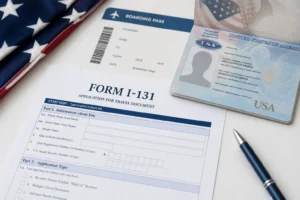
Advance Parole (Form I-131 Travel Document)
Advance Parole allows certain individuals who do not have a valid visa to travel outside the United States and return without abandoning their pending applications. It is most commonly used by adjustment of status applicants who would otherwise be unable to travel internationally without jeopardizing their I-485.
Advance Parole documents have a specific expiration date printed on them, and that date must be strictly respected. Traveling on an expired Advance Parole document can result in denial of re-entry at the port of entry and automatic abandonment of your pending I-485 application, which would require starting the process over from the beginning.
As of mid-2026, USCIS is processing Form I-131 in approximately 16 to 23 months for most advance parole applications, though timing varies notably by service center and case category. Always verify current times at uscis.gov/processing-times before filing.
In some cases, USCIS issues a combo card that combines the EAD and Advance Parole on a single document (the EAD/AP combo card). If you hold a combo card, confirm the expiration date printed on it and remember that, under current policy, the EAD portion and the travel-document portion no longer necessarily share the same automatic-extension treatment, check both functions separately.
Note: a separate $1,000 fee created by the 2025 H.R. 1 law applies to certain humanitarian parole grants under other, unrelated provisions of law. It does not apply to the standard Form I-131 advance parole travel document filed by adjustment of status applicants.
ITIN, When and Why It Expires
The Individual Taxpayer Identification Number (ITIN) is issued by the IRS, not USCIS, but it is closely connected to the immigration process for many families. ITINs are used by individuals who are not eligible for a Social Security Number but who need to file federal tax returns, including many visa holders, nonresident aliens, and undocumented individuals with tax obligations.
An ITIN can become inactive under two distinct circumstances:
- Non-use: If an ITIN is not used on a federal tax return for three consecutive tax years, it expires automatically. This means even if your number was issued relatively recently, failure to file returns using it can cause it to lapse.
- Historical middle-digit rollout (already completed): Between 2016 and 2020, the IRS phased out ITINs in waves based on their middle digits. That program has concluded, it is not an active, ongoing 2026 schedule. All ITINs with middle digits 70 through 88, and middle digits 90 through 99 (except 93) if the ITIN was assigned before 2013, already expired in those earlier rounds if never renewed. If you hold one of these numbers and never renewed it, treat it as expired today, even though the rollout itself is history rather than a current-year event.
Renewal is completed through Form W-7. You can submit it alongside your next federal tax return, or through a Certifying Acceptance Agent (CAA), a professional authorized by the IRS to assist with ITIN applications and renewals.
Failing to renew an expired ITIN can delay your tax refund, prevent proper filing, and in some cases affect eligibility for certain tax credits such as the Child Tax Credit.
U.S. Passport and Passport Card
While the U.S. passport is not an immigration document in the strict sense, it is issued to citizens, but it is frequently used alongside immigration files and serves as a key travel and identity document for naturalized citizens and others in the immigration process.
- Adult passport: Valid for 10 years
- Passport for minors under 16: Valid for 5 years
- Passport Card: Valid for 10 years (adults) or 5 years (minors)
Renewal for adults is done using Form DS-82 by mail if the previous passport was issued within the last 15 years, was issued when the holder was age 16 or older, and remains undamaged and unreported as lost or stolen. Otherwise, Form DS-11 is required for in-person renewal at a passport acceptance facility. Passport renewals are handled by the U.S. Department of State, not USCIS.
Visa Stamps in Your Passport
A visa stamp in your passport grants you permission to request entry into the United States at a port of entry. It carries an expiration date, but that date refers to the last day you can use the visa to attempt entry, not the length of time you are authorized to stay once inside.
This is one of the most common sources of confusion among immigrants and visa holders. Once inside the U.S., your authorized period of stay is determined by the date annotated on your Form I-94 Arrival/Departure Record, not the visa expiration date. Staying beyond your I-94 date, even if your visa stamp has not yet expired, constitutes an overstay and can have serious immigration consequences.
You can look up your current I-94 admission record at the CBP online portal. Visa stamps themselves are renewed at a U.S. consulate or embassy abroad, not through USCIS.
Note: as of fiscal year 2026, certain nonimmigrant visa categories are also subject to a new Visa Integrity Fee established by the 2025 H.R. 1 law, charged in addition to the standard visa application fee. This is a separate charge and does not change the visa stamp’s printed expiration date.
Immigration Documents That Do NOT Expire
Naturalization Certificate (N-550 / N-570)
Once you become a U.S. citizen through naturalization, the Certificate of Naturalization issued to you does not expire. It serves as permanent, lifetime proof of your citizenship. However, if it is lost, stolen, or mutilated, you can apply for a certified replacement using Form N-565. Keep this document stored securely, in a fireproof safe or similarly protected location.
Certificate of Citizenship (N-600)
A Certificate of Citizenship issued to individuals who acquired or derived citizenship through a U.S. citizen parent also does not carry an expiration date. It is a permanent document, and replacement is available through Form N-565 in the same manner as a Naturalization Certificate.
Social Security Card
A Social Security Card issued without restrictions does not expire. However, cards that include the notation ‘VALID FOR WORK ONLY WITH DHS AUTHORIZATION’ are tied to your immigration status. If your underlying work authorization lapses, for example if your EAD expires, working becomes unauthorized even if the physical card remains in your possession. The card itself does not expire, but the permission it represents does.
How to Check Whether Your Immigration Document Is Still Valid
- Physical expiration date: Every document with an expiration date will display it clearly on its face. Check the front of your Green Card, EAD, or Advance Parole document for the exact date.
- USCIS Case Status tool: Available at uscis.gov, this tool lets you enter your receipt number and check the status of any pending renewal or application in real time.
- USCIS online account (myUSCIS): USCIS continues to expand its online account platform. Applicants can manage active cases, receive electronic notices, respond to requests for evidence, and upload supporting documents directly through myUSCIS.
- IRS ITIN status confirmation: The IRS mails notice letters, typically CP-48 or Letter 5821, to ITIN holders whose numbers are expiring or have expired. You can also call the IRS directly to confirm your ITIN status if you have not received a notice.
- Form I-94 lookup: If you hold a visa and want to confirm your authorized period of stay, visit the CBP I-94 portal online and retrieve your current admission record using your travel document information.
Need help reviewing all your documents and identifying what needs renewal? Our team is trained to help you organize your immigration paperwork and flag upcoming deadlines before they become problems.
What Happens If You Use an Expired Immigration Document?
Using an expired immigration document can have consequences ranging from inconvenient to severe, depending on the document type and the context in which it is presented.
Expired Green Card: Can You Still Work and Travel?
An expired Green Card does not cancel your permanent residence. You remain a lawful permanent resident even after the card’s expiration date passes. However, the practical consequences of carrying an expired card are significant:
- Employers are prohibited from accepting an expired Green Card as proof of work authorization during the Form I-9 verification process. This can result in termination until valid documentation is presented.
- Airlines may refuse to board you for international flights, as carriers are responsible for verifying travel documents before departure.
- CBP officers at ports of entry may require additional verification steps before admitting you if you return from international travel with an expired card.
- Travel outside the U.S. becomes genuinely risky without a valid automatic extension receipt notice in your possession, even if your residence status is intact.
The safest approach is to never let your Green Card expire without having a pending renewal on file.
Expired EAD: What Are Your Options?
Working after your EAD expires, without a valid automatic extension in place, constitutes unauthorized employment. This can have serious downstream consequences for future immigration applications, including adjustment of status petitions and naturalization eligibility. Courts and USCIS have consistently treated unauthorized employment as a significant negative factor in immigration proceedings.
If your EAD renewal was filed on or after October 30, 2025, in most categories no automatic extension applies once the card expires, you generally must stop working until the new EAD is issued, even while your renewal remains pending. The main exceptions are TPS beneficiaries covered by an active Federal Register extension notice, and, in some circumstances, spouses of E and L nonimmigrant visa holders whose work authorization flows from their visa status rather than the card. If you filed before October 30, 2025 and were already granted the legacy extension, carry both your expired EAD and your Form I-797 receipt notice together during that period.
If you did not file before expiration and do not qualify for one of these narrow exceptions, you must stop working immediately and wait until a new EAD is issued before resuming employment. When in doubt about your category, confirm directly with USCIS or a licensed immigration attorney before continuing to work.
Automatic Extensions: When USCIS Extends Your Document While You Wait
USCIS’s approach to automatic extensions shifted considerably heading into 2026: Green Card and conditional-resident extensions remain generous, while the employment authorization extension that once covered many EAD categories was largely eliminated in late 2025. Here is where things stand for each document.
I-90 Green Card Renewal, 36-Month Automatic Extension
When a Green Card holder files Form I-90 before the card expires, USCIS automatically extends the card’s validity for 36 months from the expiration date printed on the card. The Form I-797 receipt notice, presented alongside the expired Green Card, serves as proof of this extension for I-9 employment verification, airline check-in, and other purposes.
I-765 EAD Renewal, Automatic Extension Eliminated for Most Categories (Since October 30, 2025)
Until October 2025, eligible applicants who filed Form I-765 before their EAD expired could receive an automatic extension of up to 540 days. Effective October 30, 2025, DHS eliminated this automatic extension for renewal applications filed on or after that date in most categories, including adjustment of status and asylum applicants. Renewals receipted before October 30, 2025 keep whatever extension they were already granted under the prior rule; that legacy extension continues to run its course.
Going forward, only TPS beneficiaries (through category-specific Federal Register notices) and a small number of other statutory exceptions continue to receive an automatic extension. If your category is not on that short list, plan to file your I-765 renewal as early as USCIS allows, and be prepared to stop working if your card expires before the new one arrives.
I-751 Conditional Green Card, 48-Month Extension
When a conditional resident files Form I-751 to remove conditions on residence, USCIS automatically extends the validity of the 2-year Green Card for 48 months from the card’s expiration date. The same extension applies when an investor files Form I-829. Both extensions are documented on the Form I-797 receipt notice.
| Form Filed | Document Extended | Extension Period |
| I-90 | Green Card (10-yr) | 36 months |
| I-765 (receipted before 10/30/2025, eligible categories) | EAD | Up to 540 days (legacy cases only) |
| I-765 (filed on/after 10/30/2025) | EAD | No automatic extension for most categories; TPS and limited exceptions only |
| I-751 | Conditional Green Card (marriage) | 48 months |
| I-829 | Conditional Green Card (investor) | 48 months |
How to Renew or Replace Expired Immigration Documents
Which Forms to File for Each Document Type
| Document | Renewal / Replacement Form | Filed With |
| Green Card (10-yr expired) | Form I-90 | USCIS |
| Conditional Green Card (marriage) | Form I-751 | USCIS |
| Conditional Green Card (investor) | Form I-829 | USCIS |
| EAD | Form I-765 | USCIS |
| Advance Parole | Form I-131 | USCIS |
| ITIN | Form W-7 | IRS |
| Naturalization Certificate | Form N-565 | USCIS |
| Certificate of Citizenship | Form N-565 | USCIS |
| U.S. Passport | Form DS-82 (mail) or DS-11 (in person) | U.S. Dept. of State |
Current Filing Fees (2026)
Filing fees are subject to change, and the newer H.R. 1 fees below are indexed annually to inflation. Always verify current amounts at uscis.gov/forms before submitting any application.
- Form I-90: $465 (paper) / $415 (online)
- Form I-765: $520 (paper) / $470 (online). Note: applicants filing in the asylum, parole, or TPS categories are also subject to a separate H.R. 1 employment authorization fee, adjusted for inflation effective January 1, 2026: $560 for an initial EAD, and generally $275 to $280 for a renewal depending on the exact category, confirm the current amount for your category on the USCIS fee schedule.
- Form I-131: $630 (this is separate from the new +$1,000 H.R. 1 fee that applies only to certain humanitarian parole grants, not to standard advance parole)
- Form I-751: $750 (paper) / $700 (online)
- Form N-400: $760 (biometrics included) paper/ $710 (online); a reduced fee of $380 may be available for applicants at or below 400% of the Federal Poverty Guidelines
- Form N-565: $555 (paper)/ $505 (online)
- Form I-589 (asylum application): $100 one-time filing fee, plus a $102 annual fee for each year the application remains pending, both introduced by the 2025 H.R. 1 law and generally not eligible for a fee waiver
Fee waivers remain available for certain other applicants who meet income-based criteria. Check the USCIS fee waiver page for eligibility requirements.
General Renewal Timeline Recommendations
As a rule of thumb, begin gathering documents and preparing your renewal application at least 12 months before the expiration date on any USCIS document. For ITIN renewal, begin the process at least three months before tax season to avoid delays in filing your return. For passports, the State Department recommends applying at least 6 to 8 months in advance during peak processing periods.
Frequently Asked Questions About Immigration Document Validity
Q: Can I travel internationally with an expired Green Card?
A: If you have a valid automatic extension, specifically your expired Green Card plus your I-90 Form I-797 receipt notice, you may be able to re-enter the U.S. at a port of entry. However, airlines operating in other countries may not recognize this combination and may refuse to board you. Always check with the specific airline and confirm your situation with CBP before departing.
Q: My EAD expired two weeks ago and I never filed for renewal. Can I still work?
A: No. If you did not file Form I-765 before the expiration date and no automatic extension applies, you must stop working immediately. Continuing to work without valid authorization can negatively affect your future immigration applications. File Form I-765 as soon as possible and consult with a licensed immigration attorney about your options.
Q: I heard EAD automatic extensions were eliminated. Does that affect me?
A: It depends on your category and filing date. Effective October 30, 2025, USCIS eliminated the automatic extension for most EAD renewal categories, including adjustment of status and asylum applicants, for renewals filed on or after that date. Renewals filed and receipted before that date keep any extension already granted. TPS beneficiaries and a few other narrow categories may still qualify through separate Federal Register notices. Because the rules changed significantly and vary by category, confirm your specific situation on USCIS’s EAD extension webpage or with a licensed immigration attorney rather than assuming an older rule still applies.
Q: Does my ITIN expire even if I file taxes every single year?
A: Not due to non-use. If you use it on a federal return each consecutive year, it will not expire for that reason. Separately, the IRS’s middle-digit rollout that phased out older ITINs concluded in prior years and is not an active 2026 schedule, but if your ITIN’s middle digits fall within that historical rollout (70 through 88, or 90 through 99 except 93 if issued before 2013) and you never renewed it, it is likely already expired regardless of your filing history. Check your notice or call the IRS to confirm your specific ITIN’s status.
Q: My Naturalization Certificate has no expiration date. Do I need to carry it with me?
A: No. Once you are a U.S. citizen, your U.S. passport is the standard document used for identification and travel. Keep the Naturalization Certificate stored safely at home. It is not a document you need to carry day to day.
Q: What is the difference between the visa expiration date and my authorized stay?
A: Your visa expiration date is the last day you can use the visa to request entry into the U.S. Your authorized period of stay, meaning how long you can remain once admitted, is recorded on your Form I-94. These are two entirely separate dates. Overstaying your I-94 date is an immigration violation even if your visa stamp has not expired.
Q: Can a document preparation service file renewal forms for me?
A: A registered document preparation service can assist you in organizing paperwork and completing forms. They cannot provide legal advice or represent you before USCIS. For legal strategy, representation, or complex situations, always consult a licensed immigration attorney.
How YT Multiservices Helps You Stay on Top of Your Immigration Documents
Managing multiple document expiration dates across Green Cards, EADs, Advance Parole documents, and ITINs is more complex than it sounds. Different forms go to different agencies, fees change, processing times fluctuate, and one missed filing can create a chain of complications that takes months to resolve.
YT Multiservices is not a law firm and does not provide legal advice or legal representation. What we do is help immigrants and their families in the West Palm Beach area stay organized and prepared before deadlines arrive.
Our document services include:
- Document review to identify which documents are current, which are approaching expiration, and which have already lapsed
- Assistance preparing and organizing renewal packages for Form I-90, Form I-765, Form I-131, and Form I-751 submissions
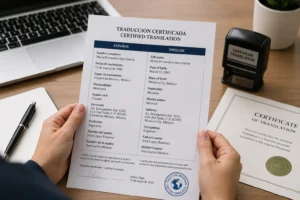
- Certified translation services for supporting documents that must accompany renewal applications
- ITIN renewal assistance through Form W-7 as IRS-authorized Certifying Acceptance Agents
- Notarization services for documents that require notarial acknowledgment as part of a renewal package
- Whether you are renewing a single document or managing an entire family’s immigration paperwork, we are here to make the process organized, accurate, and on time.
Your immigration documents are too important to manage reactively. Contact YT Multiservices today and let us build your renewal timeline before the next deadline finds you.