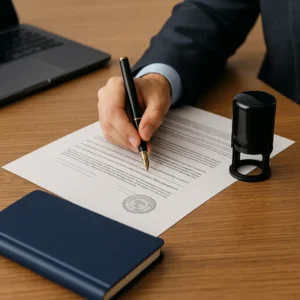
When it comes to proving where you live, most people rely on utility bills, lease agreements, or government-issued IDs. But what happens when you don’t have those documents, or they aren’t enough for the agency requesting proof? This is where a residency affidavit comes in. A residency affidavit is a sworn statement confirming your place of residence, and it can serve as an official substitute when traditional documentation is unavailable or incomplete.
Understanding how residency affidavits work is essential because they carry legal weight. Once notarized, the statement becomes a legally binding declaration that can be used in various situations, from enrolling children in school to updating government records. At YT Multiservices, we often see clients who are unsure about how to write one or whether their affidavit will be accepted. That’s why having the right guidance can make all the difference.
In this guide, we’ll take a deeper look into what a residency affidavit is, why it matters, and how to craft one that meets official requirements. We’ll also cover notarization—an essential step that ensures your affidavit is recognized by institutions—and provide answers to the most common questions people have about the process.
Understanding Residency Affidavits
Residency affidavits are designed to bridge the gap when standard proof of address is unavailable. Instead of relying on a stack of bills or rental contracts, a sworn affidavit serves as a legally recognized substitute. This makes it especially useful for individuals in transition, such as families moving to a new city, recent immigrants, or students living with relatives. Institutions recognize that not everyone has the same paperwork, so affidavits provide a standardized alternative.
The legal nature of these documents lies in their sworn character. By signing a residency affidavit, you are declaring under oath that the information provided is true and accurate. This means there can be consequences if the information is proven false, including penalties for perjury. Because of this, the language used must be precise, and the information included should align with reality. Accuracy is not just recommended—it is required.
It’s also important to understand that while affidavits are widely accepted, their requirements can vary depending on the institution requesting them. A school district may ask for different details than a state DMV, and a federal agency may require even stricter standards. This variability makes it crucial to not only write the affidavit correctly but also ensure it fits the exact context in which it will be used.
Applications of Residency Affidavits
Residency affidavits are commonly used in school enrollment, especially when parents or guardians live with relatives and do not have a lease in their own name. Instead of turning away a child due to lack of paperwork, schools often accept an affidavit as proof of residence. This ensures that children have uninterrupted access to education even when housing arrangements are less traditional.
Another frequent application is with government agencies that require updated address information. When you’re applying for state benefits, updating your driver’s license, or registering to vote, some offices may allow you to use an affidavit to prove your residency. This flexibility is key for individuals who may not yet have all the required utility bills or official letters under their name.
Residency affidavits also play a role in legal and financial matters. For example, banks or courts may request proof of residence during proceedings, and an affidavit can help establish this information clearly. Have you ever thought about how something as simple as your address could impact legal or financial processes? In moments like these, an affidavit becomes more than just a statement—it becomes a critical piece of documentation.
Characteristics of Valid Residency Affidavit
A strong residency affidavit must include specific elements to be valid. At a minimum, it should state the full legal name of the person making the declaration (the affiant), their current address, and the date when they began living at that location. These basic facts create the foundation of the affidavit and make it easier for agencies to verify your claim.
Equally important is the inclusion of identifying details that connect the person to the residence. For instance, the affidavit may specify the relationship between the declarant and the property owner, or it may reference attached documents that support the claim. Some institutions even require witnesses or supporting affidavits from landlords or relatives to strengthen credibility.
Finally, no residency affidavit is complete without a sworn oath and notarization. This section confirms that the person signing the document understands the legal responsibility they are taking on by affirming its truthfulness. Without this, the affidavit may not be accepted, regardless of how detailed it is. This underscores the importance of following not only the structure but also the legal requirements that turn an affidavit into an enforceable statement.
Step-by-Step Guide to Writing Your Affidavit
Start by making the purpose of your document clear. Identify it directly as a Residency Affidavit and explain the reason you are preparing it, such as “to meet school enrollment requirements” or “to update a driver’s license record.” The more precise you are, the stronger your affidavit will be.
Next, include your complete legal name exactly as it appears on official identification, such as your passport or driver’s license. Add your date of birth as well. This level of detail helps eliminate confusion in case someone else has a similar or identical name. Including accurate personal identifiers is a standard practice in legal paperwork.
Be sure to write your full residential address without leaving out details. List apartment or unit numbers, along with the city, state, and ZIP code. The address should match the way it appears on other formal records to maintain consistency and credibility.
You should also indicate the length of time you have lived at that address. Use specific dates or timeframes like “since January 2022” or “for the past three years.” Avoid vague wording, as it may weaken the affidavit’s reliability. Precise timelines give institutions a clear understanding of your residency.
Conclude with a sworn declaration affirming that every statement in the affidavit is truthful. A standard phrase might be, “I declare under penalty of perjury that the above information is true and correct to the best of my knowledge.” This formal statement reinforces the seriousness of your claim and legally binds you to its accuracy.
Finally, reserve space for your signature, the date of signing, and the notarial section. A licensed notary public must witness your signature and add their official seal, which verifies your identity and certifies the authenticity of the document. Their role ensures your affidavit carries legal weight and will be accepted by the requesting institution.
Tips for Ensuring a Solid Affidavit
One of the most useful tips is to keep your affidavit professional in tone. Avoid casual language or vague descriptions, as these can reduce credibility. Instead, stick to factual statements and formal phrasing that shows you understand the seriousness of the declaration.
Another tip is to include supporting evidence when possible. Even if an affidavit is accepted on its own, attaching a utility bill, a school letter, or a piece of mail addressed to you at the residence can reinforce your claim. Think of it as adding extra weight to your statement, which can reduce the chances of rejection.
Lastly, always double-check your document for accuracy before notarization. Simple mistakes like spelling errors in an address or missing dates can cause unnecessary delays. By taking a few minutes to review carefully, you increase the likelihood that your affidavit will be accepted the first time you present it.
Notarization for Residency Affidavit
Notarization is one of the most critical steps in preparing a residency affidavit. Without it, the document is little more than a personal statement. By having a notary public witness your signature, you are providing an extra layer of verification that the statement is authentic and made under oath. This is why most schools, government agencies, and banks require notarization before they accept the document.
The notarization process itself is relatively simple. You bring the unsigned affidavit to a notary, present a valid form of identification, and sign the document in their presence. The notary then applies a seal and signature, officially certifying the affidavit. This process ensures that your identity has been confirmed and that you signed voluntarily.
For many people, finding a notary is the only challenge. However, businesses like YT Multiservices make this step easier by offering in-person and online options. With the right support, notarization can be completed quickly and without unnecessary stress.
Online Notarization for Residency Affidavits
Technology has made notarization more accessible than ever. Remote online notarization allows you to complete the process from your home or office using a secure video platform. Instead of visiting a notary in person, you upload your affidavit, verify your identity through a digital check, and sign electronically while the notary observes.
This option is particularly convenient for people with busy schedules or mobility challenges. It’s also valuable for those living in areas where access to notaries is limited. As long as your state recognizes remote notarization—and many now do—it is just as valid as an in-person process.
Still, not all institutions accept online notarization yet. Before choosing this route, confirm with the agency requesting your affidavit that they will accept a digitally notarized document. YT Multiservices can help you determine whether this option fits your situation and guide you through the process step by step.
FAQs About What is a Residency Affidavit
How do I write a resident affidavit?
Writing a resident affidavit involves three main steps: drafting your statement, reviewing it for accuracy, and notarizing it. The statement should include your full name, address, duration of residence, and a declaration that the information is true. Keep the wording formal and direct. Once written, review carefully to ensure there are no errors before taking it to a notary.
Many people prefer to use templates as a starting point, which can help ensure they don’t forget key details. However, remember that every institution may have slightly different requirements, so you may need to adapt the template to fit your needs. YT Multiservices can provide guidance and even prepare the affidavit for you to make the process easier.
Finally, always close your affidavit with a sworn statement. This legal language is what gives the document its weight. Without it, the affidavit may be rejected as incomplete.
What is the affidavit of residency in the US?
In the United States, an affidavit of residency is a legally binding document used to confirm where you live. It is recognized across states and institutions as a valid form of proof when other documents are unavailable or insufficient. Because it is sworn under oath and notarized, it carries more weight than a casual letter or declaration.
This type of affidavit is commonly used in school districts, courts, and state agencies. For instance, a family moving into a new district might need one to prove their eligibility for enrollment. Similarly, a person applying for state programs or legal benefits may rely on an affidavit to establish residence.
The fact that it is legally recognized nationwide makes it a versatile document. However, the exact wording and requirements can vary depending on the context, which is why professional preparation is often recommended.
What is the affidavit of place of residence?
The affidavit of place of residence is essentially the same as a residency affidavit. Both terms describe a sworn statement confirming where someone lives. The difference in terminology often depends on the specific institution or region. In practice, they serve the same function: establishing proof of residence when other documentation is unavailable.
This affidavit usually specifies the physical address of the residence, the name of the resident, and the length of time they have lived there. It may also include supporting details such as the landlord’s name or a co-signer’s confirmation.
Because “place of residence” can sometimes imply a temporary or secondary location, institutions may ask for additional details to ensure accuracy. The key takeaway is that both documents share the same purpose: to provide a reliable, sworn statement of where a person lives.
How to write a letter showing proof of residency for a family member?
Writing a proof of residency letter for a family member follows a similar process to writing one for yourself. The key difference is that you are declaring their residence at your address. For example, a parent might write one to confirm that their adult child lives with them. In this case, the affidavit must clearly state the relationship and the fact that the family member resides at the same address.
To make the document stronger, include details such as the family member’s full name, date of birth, and how long they have been living with you. Adding supporting documents, like a piece of mail addressed to them at your home, can further reinforce the claim.
Because you are making the statement on someone else’s behalf, notarization becomes even more important. The notarization confirms that you, as the declarant, are making a truthful claim under oath, which adds credibility to the affidavit.
Conclusion
Residency affidavits are powerful tools for proving where you live when traditional documentation is not available. From enrolling children in school to updating government records, these sworn statements open doors that might otherwise remain closed. Yet, as with any legal document, their strength lies in precision, accuracy, and proper notarization.
Throughout this guide, we explored the many uses of residency affidavits, their key elements, and how to prepare one that meets official standards. We also looked at the importance of notarization—whether in person or online—and answered common questions that people face when drafting these documents.
If you find yourself needing a residency affidavit but feel unsure about how to begin, remember that professional support can make the process faster and easier. At YT Multiservices, we help clients prepare, review, and notarize their affidavits so that their documents are accepted the first time. Why face uncertainty when you can rely on expert guidance to get it right?