USCIS filing fees can feel like a moving target, especially when you are preparing family-based paperwork and you are trying to match the right form, the right edition date, the right filing method, and the right payment method in one clean submission. The most reliable way to avoid a rejection is to confirm fees directly through USCIS right before you file, because the official fee schedule and calculator are updated and are designed to reduce incorrect payments.
This article is general information, not legal advice. YT Multiservices is not a law firm and does not provide legal representation, but we can help you with the administrative side of filing, including form prep support, organizing supporting documents, checking for missing signatures, helping you keep information consistent across forms, and assisting with certified translations and notarization when appropriate.
It also helps to separate fees by agency, because people often say “USCIS fees” when they really mean “all government fees in the whole process.” USCIS collects fees for forms filed with USCIS, while the U.S. Department of State collects separate fees for visa processing steps such as consular processing and National Visa Center stages, and those payments follow different rules and platforms.
USCIS Filing Fee Increases: Impact On Immigration Applications
A big reason filings still feel different is that USCIS’s major fee rule went into effect in 2024 and changed how many people think about “bundled” filings. USCIS also created new guidance, tools, and policy updates connected to that rule, so even if you are filing now, you cannot rely on what a friend paid years ago for what seems like the same package.
USCIS is also clear that if you submit an incorrect or incomplete fee, your form can be rejected at intake, which means you lose time before your case even begins processing. That is why the fee check is not a budgeting detail; it is a filing accuracy step that directly affects whether you get a receipt notice and can track your case.
Also, the late 2025 shift affected almost everyone who filed by mail with the move to electronic only payments for paper filed forms. USCIS announced that, after the effective date, it will no longer accept paper checks and money orders for paper filings, so people who still mail packets need to follow the newest payment instructions to avoid rejection.
USCIS also published details about modernizing payment options, including electronic debit authorization and updated mail filing payment guidance. In practical terms, this means you should check payment instructions as carefully as you check fee amounts, because paying the correct amount the wrong way can still cause a problem.
Finally, USCIS announced an inflation-based adjustment for certain immigration related fees tied to legislation, effective for this year, which matters for anyone filing. The safest approach is to confirm whether any fee changes are scheduled to take effect on your intended filing date, especially if you are mailing close to year end.
Marriage Green Card (Form I-130/I-485)
For a marriage green card, many families start by focusing on the relationship petition and then move to adjustment of status when the applicant is eligible to file inside the United States. USCIS publishes a dedicated page for each form and directs filers to confirm the current filing fee using the official fee schedule, which is helpful because fees can differ depending on how you file and what you file together.
One of the most common administrative mistakes is assuming that if you are filing more than one form in the same packet, you can treat the payment as one simple combined step. USCIS fee rule guidance explains that separate fees may apply across forms even when filed together, and the cleanest way to avoid confusion is to confirm the fees for the exact set of forms you plan to submit through USCIS resources rather than relying on older charts.
There is also a timeline impact that is easy to overlook because it feels unrelated to money. If your filing is rejected for a fee issue, you lose the time you would have spent in line for receipting, and you may also have to reprint, reship, and rebuild your packet, which can be stressful for couples trying to coordinate documents from multiple places. USCIS explicitly notes that fee mistakes are a common rejection reason at lockbox intake.
K-1 Fiancé Visa (Form I-129F)
The K-1 process starts with Form I-129F filed with USCIS, then moves to the Department of State for the visa interview stage, so the fee conversation has two different “chapters.” USCIS handles the petition stage and the Department of State handles visa processing fees later, which is why it helps to plan by stage instead of expecting one single USCIS payment to cover everything.
A smart administrative habit for K-1 cases is to confirm the current USCIS petition fee through USCIS and confirm the consular fee rules through travel.state.gov, because those systems are maintained by different agencies. This keeps you from mixing up payment platforms and also reduces the risk of sending money to a site that is not an official government site.
Spousal Visa (CR-1 Visa – Consular Processing)
With a CR-1 spousal visa through consular processing, the case usually begins with Form I-130 with USCIS and then transitions to National Visa Center processing and a consular interview abroad. The Department of State explains that after the NVC welcome letter, you pay required processing fees through the CEAC system, and those are not paid by mail.
Because CR-1 cases involve both USCIS and the Department of State, it is easy to over focus on one set of fees and forget the other. A calmer way to plan is to treat the USCIS petition as the first government payment step, then expect additional government fees as the case moves through NVC and the consulate, with instructions arriving when your case is ready for the next stage.
U.S. Citizenship (Form N-400)
For citizenship, Form N-400 is the core naturalization filing with USCIS, and USCIS provides official pages and tools to confirm fees and filing options. Even when everything else is correct, a payment issue can cause a rejection, so the best practice remains confirming the current fee and payment method through USCIS right before submission.
USCIS also emphasizes that case timing information is an estimate and depends on the form, category, and office. If you are planning around travel, work, or family events, you can check estimated processing times using USCIS’s official processing time tool, while remembering that those timelines can change as workloads shift.
Green Card Costs And Fees (2026)
When people ask about “green card costs,” they often mean government filing fees plus the preparation expenses that come with building a complete packet. USCIS fees are tied to the forms you submit and are listed in the fee schedule, while consular processing fees are handled through the Department of State, so the best first step is identifying which path you are taking and which agency collects which payment.
For adjustment of status filings inside the United States, USCIS also publishes form specific pages that point you back to official fee resources. That matters because some families prepare packets that include multiple requests and supporting steps, and the cost picture can shift depending on what you are filing, how you are filing, and whether your filing includes additional required services.
Outside of government fees, many applicants have documentation needs, especially when civil documents are in another language. USCIS expects documents to be understandable and properly prepared, and this is where certified translations can become a practical part of your plan, not as a luxury but as a way to avoid confusion and back and forth that can slow everything down.
Medical exam requirements can also affect the overall process, and USCIS has issued guidance that, when a medical exam is required, it must be submitted in the way USCIS instructs for your filing type. Since medical exam logistics and timing can influence how smooth your adjustment submission feels, it helps to review USCIS guidance early so you are not rushing at the end.
U.S. Citizenship Forms And Fees
USCIS provides a centralized fee schedule and a fee calculator for all USCIS forms, and it also publishes policy guidance explaining that required fees must be submitted in U.S. currency and in the manner USCIS accepts. If you have not checked these resources since payment rules changed, it is worth revisiting them before you file.
For applicants filing by mail, the payment modernization is especially important. USCIS now provides official pathways for paying by credit card authorization or ACH authorization when filing by mail, and following the current instructions can help prevent rejections caused by outdated payment habits.
List Of Other Common Immigration Forms
Even when your main goal is a green card or citizenship, many households end up filing additional USCIS forms as their case progresses. For example, some applicants file Form I-765 for employment authorization, and USCIS provides a form page that links to the official fee schedule and reflects the current payment requirements for mail filings.
Travel related applications can also appear in a family’s paperwork journey, and USCIS’s Form I-131 page explains that certain parole related fees may apply in specific contexts and that they are subject to adjustment, which reinforces why it is better to confirm details on official pages rather than relying on old online summaries.
For conditional residents, Form I-751 is another common form people encounter later, and USCIS provides the official form page and links back to fee verification resources. Since these cases often involve families managing deadlines while balancing work and childcare, having your documents organized and your payment method correct becomes a stress reducer.
For permanent residents who need to renew or replace a green card, Form I-90 is the standard USCIS filing, and the U.S. government’s own public guidance points people back to USCIS and the fee calculator for the most current cost information. If you are planning travel or employment verification around a replacement card request, it is a good idea to check USCIS processing time estimates as well as the current fee rules.
For many family-based cases, the Affidavit of Support is also part of the documentation picture, and USCIS and the Department of State both provide official guidance on how this piece fits into the process depending on whether you are adjusting status with USCIS or submitting documents through NVC for consular processing. Since this paperwork is very detailed, preparing it carefully helps you avoid delays caused by missing pages or inconsistent information.
Here’s a table with most USCIS forms and its application fee:
| Application type | Paper filing fee | Online filing fee | Notes |
| I‑90 Application to Replace Permanent Resident Card | $465 | $415 | Biometrics included |
| I‑102 Replacement/Initial Non‑immigrant Arrival–Departure Document | $560 | N/A | Only paper filing |
| I‑129F Petition for Alien Fiancé(e) | $675 | N/A | Only paper filing |
| I‑130 Petition for Alien Relative | $675 | $625 | |
| I‑131 Application for Travel Document (Parole/re‑parole) | $630 | $580 | For individuals already paroled; biometrics included |
| I‑131 Refugee Travel Document (age ≥16) | $165 | N/A | Only paper filing |
| I‑131 Refugee Travel Document (child <16) | $135 | N/A | Only paper filing |
| I‑131A Application for Travel Document (Carrier Documentation) | N/A | $575 | Must be paid online |
| I‑192 Application for Advance Permission to Enter as Non‑immigrant | $1,100 | N/A | Applies to both CBP and USCIS filings |
| I‑212 Application to Reapply for Admission After Deportation/Removal | $1,175 | N/A | |
| I‑290B Notice of Appeal or Motion | $800 | N/A | |
| I‑360 Petition for Amerasian/Widow(er)/Special Immigrant | $515 | N/A | |
| I‑485 Application to Register Permanent Residence or Adjust Status (age ≥14) | $1,440 | $1,440 | Biometrics included |
| I‑485 Application (under age 14, certain conditions) | $950 | N/A | Only paper filing |
| I‑539 Application to Extend/Change Non‑immigrant Status | $470 | $420 | |
| I‑601 Application for Waiver of Grounds of Inadmissibility | $1,050 | N/A | |
| I‑601A Provisional Unlawful Presence Waiver | $795 | N/A | |
| I‑751 Petition to Remove Conditions on Residence | $750 | N/A | |
| I‑765 Application for Employment Authorization (general category) | $520 | $470 | Reduced fees apply for certain categories (e.g., $260 for I‑485‑related EADs) |
| I‑824 Application for Action on an Approved Application/Petition | $590 | N/A | |
| I‑929 Petition for Qualifying Family Member of a U‑1 Non‑immigrant | $0 | N/A | Fee exempt |
| N‑336 Request for Hearing in Naturalization Proceedings | $830 | $780 | |
| N‑400 Application for Naturalization | $760 | $710 | |
| N‑400 (reduced fee for household income 150–400 % of FPG) | $380 | N/A | Reduced fee only available for paper filings |
| N‑565 Application for Replacement Naturalization/Citizenship Document | $555 | $505 | |
| N‑600 Application for Certificate of Citizenship | $1,385 | $1,335 | |
| USCIS Immigrant Fee | $235 | $235 | Applies regardless of filing method |
| Biometric Services Fee (where still required) | $30 | N/A | Applies mainly to TPS and EOIR filings |
How To Pay USCIS Filing Fees
USCIS’s rule is straightforward: include the required fee with your benefit request, and if the fee is incorrect or incomplete, USCIS may reject the filing. This is why USCIS fee planning is really “accuracy planning,” because the acceptance stage determines when you can start tracking your case and when processing time estimates become relevant.
Starting in late 2025, USCIS required electronic payments for paper filed forms, and USCIS explains this change in its own announcements and payment guidance. If you are preparing a mailed packet, you should treat the payment method rules as part of the checklist you confirm on the day you mail, just like you confirm signatures and form editions.
USCIS also offers official forms and instructions for paying by credit card authorization by mail and for paying by ACH authorization by mail. Following those instructions carefully matters because USCIS payment processing is designed to protect your financial information, and using the wrong method can cause the lockbox to reject an otherwise correct packet.
How To Pay USCIS Filing Fees Online
For forms that USCIS allows you to file online, USCIS explains that you can pay fees online through your USCIS account as part of the filing process. Online filing can also make it easier to keep records, track notices, and reduce mailing delays, although it is not available for every form or every situation.
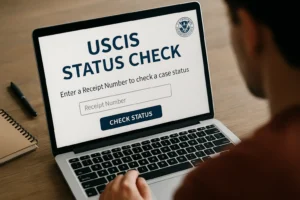
If you are using online tools, you can also use USCIS case status and processing time pages to track your case and understand estimated timeframes. These tools are helpful for planning, as long as you remember they provide estimates and do not guarantee a specific completion date for an individual case.
How Can YT Multiservices Help You
Most fee problems happen when people are doing their best but moving fast, especially when they are juggling multiple forms and deadlines. YT Multiservices can help you slow down in the right places by reviewing your packet for completeness, checking that your forms are consistent with each other, helping you organize supporting documents in a clear order, and pointing you to confirm fees and payment method rules through official USCIS resources right before submission, without advising you on legal strategy.
If you want your packet to look clean, consistent, and ready for intake, we can also support administrative details that frequently cause delays, such as missing signatures, mismatched names across documents, and incomplete copies. This is the kind of practical help that can make the filing experience feel more controlled, especially for families who are tired of second guessing every page. If your documents are in another language, certified translations and careful document presentation can reduce confusion and make it easier for your packet to be reviewed. If you would rather focus on your family and your timeline instead of spending nights formatting, printing, and reorganizing, you can reach out to YT Multiservices and we will help you prepare your paperwork in a way that feels professional and submission ready.