If you or a family member lives outside the United States and a U.S. citizen or lawful permanent resident has already filed a petition on your behalf, consular processing is most likely the path that will lead you to a green card. This route is used by hundreds of thousands of immigrants every year and understanding how it works can make all the difference between a smooth journey and costly delays.
We help Florida families and their relatives abroad stay organized, informed, and prepared at every stage of this process. We do not provide legal advice, but we do offer document preparation assistance, translation services, and guidance on what to expect along the way. For complex legal questions, we always recommend consulting with a licensed immigration attorney.
Ready to start? Contact YT Multiservices in West Palm Beach today and let us help you gather and organize your documents before your NVC deadline.
Key Takeaways
- Consular processing is the path for immigrants who live outside the United States or cannot adjust status from inside the country. It leads to the same destination as adjustment of status: a green card.
- Immediate relatives of U.S. citizens have no annual visa cap and no priority date wait. Once the I-130 is approved, their case moves forward without backlog delays.
- Family preference categories are subject to annual limits. Priority dates can involve waits of many years for some nationalities. Checking the Visa Bulletin every month is essential.
- Every non-English document submitted to the NVC or the consulate must be accompanied by a certified translation. There are no exceptions to this requirement.
- Receiving a checklist request from the NVC means your submission was incomplete. This can delay your interview scheduling by weeks or months. Submitting a complete, accurate package the first time is critical.
- The sealed visa packet received at the embassy must never be opened. Opening it can invalidate the visa and create serious problems at the U.S. port of entry.
- Most immigrant visas are valid for 6 months from the date of issuance, tied to the validity of your medical exam. You must enter the United States before this window closes.
- After your visa is approved, you must pay the USCIS Immigrant Fee (currently $235) online before USCIS will produce and mail your physical green card.
- Your green card status begins on the date you are admitted at the port of entry, not on the date your visa was issued.
Consular Processing vs Adjustment of Status: Which Path Is Right for You?
There are two main ways to become a lawful permanent resident of the United States. The first is Adjustment of Status (Form I-485), available to people who are already physically inside the U.S. The second is consular processing, which applies to people who are living abroad and need to go through a U.S. embassy or consulate in their home country to receive their immigrant visa.
Both paths lead to the same destination: a green card. However, they follow very different procedures, involve different government agencies, and have distinct timelines.
When You Must Use Consular Processing
You must go through consular processing if:
- You currently live outside the United States
- You entered the U.S. without inspection and later left the country
- You are not eligible to adjust status due to your immigration history
- Your priority date is current and you are abroad
When You Can Choose Adjustment of Status (I-485) Instead
You may be eligible to file Form I-485 if:
- You are currently in the U.S. in a valid nonimmigrant status
- Your priority date is current
- You entered the country legally with inspection
- You have not violated any terms of your visa
For those who are abroad or cannot adjust status inside the U.S., consular processing is not just an option; it is the only available path.
Who Goes Through Consular Processing?
Consular processing is available to immigrants in several visa categories. Understanding which category applies to you is essential because it directly affects your wait time and documentation requirements.
Immediate Relatives of U.S. Citizens (No Waiting List)
This is the fastest category. Immediate relatives include:
| Relationship | Category |
| Spouse of a U.S. citizen | IR-1 / CR-1 |
| Unmarried child under 21 of a U.S. citizen | IR-2 |
| Parent of a U.S. citizen (petitioner must be 21+) | IR-5 |
Immediate relatives are not subject to annual visa caps, which means there is no waiting list based on a priority date. Once USCIS approves the I-130 petition, the case moves forward without delay caused by backlogs.
Family Preference Categories (Priority Date Required)
For other family relationships, a limited number of visas are issued each year. These applicants must wait until their priority date becomes current according to the Visa Bulletin published monthly by the U.S. Department of State.
| Category | Who Qualifies |
| F1 | Unmarried adult children (21+) of U.S. citizens |
| F2A | Spouses and minor children of lawful permanent residents |
| F2B | Unmarried adult children (21+) of lawful permanent residents |
| F3 | Married children of U.S. citizens |
| F4 | Siblings of U.S. citizens (petitioner must be 21+) |
Priority dates for some categories, especially F3 and F4, can involve waits of many years depending on the applicant’s country of birth. Checking the Visa Bulletin every month is a critical habit for applicants in these categories.
The 7-Step Consular Processing Roadmap
Understanding each step helps you prepare in advance, avoid unnecessary delays, and stay ahead of deadlines.
Step 1: File Form I-130 With USCIS (The Petitioner in the U.S.)
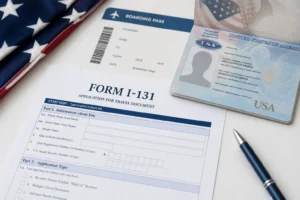
The process begins in the United States. The U.S. citizen or lawful permanent resident who wants to sponsor a family member files Form I-130, Petition for Alien Relative, with U.S. Citizenship and Immigration Services (USCIS). This form establishes the qualifying family relationship between the petitioner and the beneficiary, the person who will apply for the green card.
Filing fees and processing times vary. As of 2026, USCIS processing times for Form I-130 can range from several months to over a year depending on the category and current agency workload. A well-organized petition with all supporting evidence submitted from the start significantly reduces the risk of a Request for Evidence (RFE), which can add months to the process.
Step 2: Case Transferred to the National Visa Center (NVC)
Once USCIS approves the I-130, the case is automatically transferred to the National Visa Center (NVC), which is part of the U.S. Department of State. The NVC serves as the coordination point between USCIS and the U.S. embassy or consulate abroad.
At this stage, the NVC assigns a case number and sends a Welcome Letter or Welcome Email to the petitioner and any listed representative. This notification officially opens the NVC phase of the process. It is important to respond to NVC communications promptly, as delays in responding can push back interview scheduling significantly.
Step 3: Pay NVC Fees and Create Your CEAC Account
Once you receive your NVC case number, both the petitioner and the beneficiary must pay their respective fees through the Consular Electronic Application Center (CEAC) platform.
Fees currently include:
- Immigrant Visa Application Processing Fee: Approximately $325 per applicant (subject to change; verify at travel.state.gov)
- Affidavit of Support Fee: Approximately $120 per case, not per applicant (subject to change)
Creating and accessing the CEAC account is the entry point for all online submissions during the NVC stage. Keep your login credentials secure and accessible, as you will return to this platform multiple times throughout the process.
Step 4: Submit Form DS-260 and Upload Supporting Documents
Inside the CEAC system, the beneficiary fills out Form DS-260, the Immigrant Visa Electronic Application. This is a comprehensive form covering biographical information, travel history, family background, employment history, and other required disclosures.
At the same time, both the petitioner and the beneficiary upload supporting documents, including civil records, the affidavit of support, financial evidence, and more. Accuracy is critical here. Any inconsistency between what you write in DS-260 and what you state at the interview can raise red flags for the consular officer reviewing your case.
Step 5: NVC Reviews Your Case and Schedules the Consular Interview
After all documents and forms are submitted, the NVC reviews the package to confirm it is complete. If anything is missing or needs correction, they will issue a Checklist request. Once the case is considered documentarily complete, the NVC schedules the immigrant visa interview at the appropriate U.S. embassy or consulate in the beneficiary’s country of residence.
This is also the stage where priority dates matter most. If the beneficiary’s category is subject to a waiting list, the NVC will hold the case until the priority date becomes current on the Visa Bulletin. During this waiting period, it is important to keep all contact information updated with the NVC and to notify them of any changes in the beneficiary’s civil status or address.
Step 6: Complete the Medical Exam With an Authorized Panel Physician
Before the interview, the beneficiary must complete an immigration medical examination with a physician authorized by the U.S. government in their country, called a panel physician. This exam includes a review of vaccination history, a physical exam, blood tests, and a tuberculosis screening.
The results are sent directly to the consulate in a sealed envelope and are generally valid for 6 months from the date of the exam (and only 3 months for certain tuberculosis classifications). Because the validity of your immigrant visa is tied to the validity of your medical exam, you must enter the United States before it expires. Schedule this appointment as early as possible, since panel physician availability varies widely by country and city. In some locations, appointment wait times can stretch several weeks.
Step 7: Attend the Immigrant Visa Interview at the U.S. Embassy or Consulate
This is the most critical step in the entire process. On the interview date, the beneficiary appears in person at the U.S. embassy or consulate with all required original documents. A consular officer reviews the case, asks questions, and determines whether the immigrant visa will be approved.
If approved, the applicant receives a sealed visa packet that must not be opened under any circumstances. This packet is presented to U.S. Customs and Border Protection (CBP) upon first entry into the United States.
Our team in West Palm Beach helps families across Florida prepare complete, organized document packages for NVC submission. Avoid checklist delays and get your case moving faster, visit us or give us a call today.
What Documents Do You Need for the NVC Package?
Both the petitioner (in the U.S.) and the beneficiary (abroad) must submit a set of documents to the NVC. Below is a general overview of what is typically required. Requirements may vary based on the visa category and the applicant’s specific circumstances.
Documents from the Petitioner:
- Form I-864, Affidavit of Support
- Federal tax returns for the most recent tax year (the last 3 years are generally recommended)
- W-2s or 1099 forms
- Employment verification letter
- Proof of U.S. citizenship or permanent resident status
- Proof of domicile in the United States
Documents from the Beneficiary:
- Valid passport (must be valid for at least 6 months beyond the intended entry date)
- Birth certificate
- Marriage certificate (if applicable)
- Divorce or death certificates for any previous marriages (if applicable)
- Police certificates from your country of nationality and your country of current residence if you lived there 6 months or more, plus any other country where you lived 12 months or more after age 16, and any country where you were ever arrested (regardless of how long you lived there)
- Military records (if applicable)
- Court and prison records (if applicable)
- Two passport-style photos meeting U.S. visa photo specifications
Note: police certificates are generally considered valid for two years, so it is best to request them as your interview approaches rather than at the very start of your case.
Tips for Avoiding NVC Checklist Requests
One of the most common causes of delay in the NVC stage is receiving a Checklist, which is a notification that your submission is incomplete or contains errors. Here are practical ways to reduce that risk:
- Review every document for completeness before uploading
- Ensure all civil documents are certified copies, not photocopies
- Confirm that every non-English document includes a certified English translation
- Check that the petitioner’s financial evidence clearly meets the minimum income threshold for the household size
- Verify that passport photos meet the exact specifications listed on the CEAC platform
Taking the time to review your package thoroughly before submission is one of the most effective ways to avoid a setback that could delay your interview scheduling by weeks or months.
Which Documents Require Certified Translation?
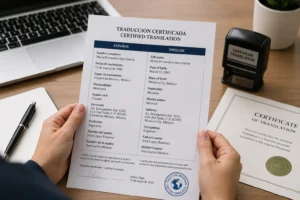
Any document not in English must be accompanied by a certified translation into English. This is a firm requirement from USCIS and the U.S. Department of State. There are no exceptions.
USCIS and Consular Translation Requirements Explained
A certified translation must include:
- A complete and accurate translation of the original document
- A signed certification by the translator stating that they are competent to translate and that the translation is accurate and complete
- The translator’s name, address, and date of certification
Translations do not need to be notarized, but they must be certified. Using a professional translation service with experience in immigration documents significantly reduces the risk of rejection. Our team offers certified document translation services for immigration purposes.
Documents That May Also Require an Apostille Before Translation
Some countries require that official documents carry an apostille before they can be used for international immigration purposes. An apostille is a form of authentication issued by the competent authority of the country that issued the document.
Countries that are signatories to the Hague Apostille Convention can issue apostilles for documents such as birth certificates, marriage certificates, and police records. If you are unsure whether your country requires this step, contact the relevant government authority in your home country or consult a document preparation professional before moving forward.
Consular Processing Timeline in 2026
One of the most common questions families ask is: how long does this take? The honest answer is that timelines vary considerably depending on multiple factors, including the visa category, the applicant’s country of birth, consulate workload, and how quickly and accurately documents are submitted.
| Stage | Estimated Time |
| USCIS I-130 Processing | 6 to 18 months (varies by category and workload) |
| NVC Transfer and Case Opening | 1 to 3 months after USCIS approval |
| Document Submission and NVC Review | 2 to 6 months (depends on completeness) |
| Scheduling Consular Interview | 1 to 6 months after documentary completion |
| Medical Exam (before interview) | 1 to 4 weeks (scheduling varies by country) |
| Visa Issuance After Interview | 1 to 2 weeks if approved |
For immediate relatives of U.S. citizens, the total timeline from I-130 filing to visa issuance can range from approximately 12 to 24 months in 2026, assuming there are no complications or requests for evidence.
For family preference categories, total wait times can be significantly longer due to annual visa caps. Some categories for applicants from certain countries, such as Mexico or the Philippines, involve waits of 10 to 20 or more years. Applicants in these categories should track the Visa Bulletin every single month to know when their priority date is approaching.
Always verify current fees and processing times at travel.state.gov and check the monthly Visa Bulletin published by the U.S. Department of State. Fee amounts are adjusted periodically, including new statutory fees, so confirm the latest figures before you pay.
What to Expect at the Consular Interview
The immigrant visa interview is the final and most important step before a visa is approved. Being well-prepared makes a significant difference in how smoothly the interview goes.
Documents to Bring on Interview Day
- Original passport (valid for at least 6 months beyond intended entry date)
- All original civil documents submitted during the NVC stage (birth certificate, marriage certificate, police records, etc.)
- Two recent passport-style photos
- Sealed medical exam envelope provided by the panel physician (if not sent electronically)
- Any additional documents specifically requested by the consulate
- Form DS-260 confirmation page
- Interview appointment letter
Common Interview Questions
Consular officers typically ask questions to verify the information provided in Form DS-260 and to confirm the legitimacy of the family relationship. Common areas of questioning include:
- Your relationship with the petitioner (how you met, how long you have known each other, especially important in spousal cases)
- Your current and previous employment history
- Whether you have ever been arrested, cited, or charged with any crime
- Your travel history to the United States
- Whether you have other relatives currently in the U.S.
- Your plans and intentions upon arrival
Answering truthfully and consistently with what you submitted in your application is absolutely essential. Any discrepancy between your oral answers and your written application may result in delays, additional administrative processing, or outright denial.
The Visa Packet: Do Not Open It
If the consular officer approves your immigrant visa, you will receive a sealed visa packet. This packet contains your documents and must be presented to U.S. Customs and Border Protection (CBP) upon arrival in the United States. Do not open this packet under any circumstances. Opening it can invalidate your visa and create serious complications at the port of entry.
What Happens After Your Visa Is Approved?
Receiving your immigrant visa is an exciting milestone, but there are still a few important steps before you officially become a lawful permanent resident.
Pay the USCIS Immigrant Fee
Before USCIS will produce your physical green card, you must pay the USCIS Immigrant Fee, currently $235, online at my.uscis.gov. This fee is separate from the immigrant visa fees you paid to the Department of State. USCIS recommends paying it after you pick up your immigrant visa and before you depart for the United States. If you do not pay this fee, you will still be admitted as a lawful permanent resident, but no green card will be produced or mailed to you, and you will only have the temporary I-551 stamp in your passport as evidence of your status. Confirm the current amount on the USCIS website before paying.
Entering the U.S. as a Lawful Permanent Resident
You must enter the United States before your immigrant visa expires. Most immigrant visas are valid for 6 months from the date of issuance. Upon arrival, present your sealed visa packet and valid passport to a CBP officer at the port of entry. The CBP officer will review your documents, may ask a few questions, and will stamp your passport to indicate your admission as a lawful permanent resident.
It is important to understand that your green card status officially begins on the date you are admitted at the port of entry, not on the date your visa was issued. Plan your travel date accordingly and make sure your medical exam is still valid on the day you enter.
Receiving Your Physical Green Card
After your entry is processed and the USCIS Immigrant Fee is paid, USCIS will mail your physical green card to the U.S. address you provided during the consular process. This typically takes 2 to 4 weeks. If you do not receive your green card within 90 days, contact USCIS to follow up on the status of the card.
Your green card is your official proof of lawful permanent resident status and grants you the right to live and work in the United States permanently, subject to any conditions attached to your specific card type. Conditional residents, typically spouses married less than two years at the time of admission, must file to remove conditions before the card expires.
How YT Multiservices Helps Florida Families With Consular Processing
Navigating the NVC process, gathering documents from multiple countries, obtaining certified translations, and meeting every deadline can feel overwhelming, especially when you are managing this from abroad or helping a family member from Florida.
YT Multiservices is not a law firm and does not provide legal advice or legal representation. What we offer is hands-on, personalized document preparation support to help families in Florida and their relatives abroad move through consular processing with greater confidence and fewer errors.
Our services include:
- Document organization and checklist review for NVC submissions
- Certified translation services
- Assistance with completing Form DS-260 and other government forms
- Guidance on apostille requirements and document authentication
- Support with photo requirements and other technical specifications
Whether you are just starting the process or you are already deep into the NVC stage and need help completing your document package, our team is ready to support you at every step.
Stop by our West Palm Beach office or give us a call to get started. We are here to help your family move forward with confidence.
FAQs
What is the difference between consular processing and adjustment of status?
Both paths lead to a green card, but they apply to different situations. Adjustment of status (Form I-485) is for people who are already physically inside the United States in a valid immigration status. Consular processing is for people who are outside the U.S. or who cannot adjust status from inside the country. The procedures, timelines, and agencies involved are different for each path.
Can I check the status of my NVC case online?
Yes. You can check the status of your case through the Consular Electronic Application Center (CEAC) at ceac.state.gov using your NVC case number and invoice ID. For general updates on where your case stands in the NVC queue, the NVC also publishes monthly workload data on the Department of State website.
What happens if I miss my consular interview appointment?
Missing a consular interview without rescheduling in advance can result in your case being considered abandoned. If you cannot attend your scheduled interview, contact the U.S. embassy or consulate as early as possible to request a rescheduled date. Procedures vary by location. Acting quickly is essential to avoid losing your place in the queue.
Can I bring a translator to my consular interview?
Policies on this vary by consulate. Some U.S. embassies and consulates allow applicants to bring an interpreter, while others provide their own or conduct the interview in the applicant’s language. Check the specific requirements of the consulate handling your case before your interview date. Preparing to answer questions in English, if possible, is always advisable.
Can my children or other family members be included in my consular processing case?
In many cases, yes. Derivative beneficiaries, typically the spouse and unmarried children under 21 of the principal beneficiary, can be included in the same immigrant visa case if they are also immigrating. Each derivative beneficiary must complete their own Form DS-260 and submit their own civil documents. Consult the NVC instructions for your specific visa category to confirm who qualifies as a derivative beneficiary in your case.
How long after arriving in the U.S. will I receive my green card?
After you enter the United States as a lawful permanent resident and the USCIS Immigrant Fee has been paid, USCIS mails your physical green card to the U.S. address you provided during the consular process. This typically takes 2 to 4 weeks. If you do not receive your card within 90 days, contact USCIS to follow up. In the meantime, your passport stamp from CBP serves as temporary evidence of your lawful permanent resident status.